Caregiving
Ensuring that care partners for older people are recognized and supported through system-level approaches
While care partners play a vital role in helping older adults live well in their communities, their contributions often go unrecognized and unsupported. As the aging population grows and care needs become more complex, it is increasingly important to strengthen the systems that surround and sustain caregivers. After decades of investment in the development of evidence-based interventions, RRF Foundation for Aging’s current focus in this priority area is on enabling system-level solutions to create a stronger, more coordinated environment that benefits both caregivers and the older adults they support (rather than developing new interventions).
RRF focuses on where system gaps and inequities most affect care partners and the older adults they support—specifically those living in community settings. Key strategies within this priority area include: Elevating Caregiving as a Societal Priority; Strengthening Caregiver Supports and Systems; Advancing Equity, Community Capacity, and Care Networks; and Enabling Innovation, Technology, and Evidence for Impact. Click below to read more.
There is a need to advance advocacy, policy, and narrative change that recognizes caregiving as essential social infrastructure. RRF supports efforts to increase public understanding of caregiving’s value, while also influencing policy, funding, and workforce decisions to better reflect the central role of caregivers and older adults.
RRF seeks to improve how caregivers are identified, supported, and coordinated across health, aging, and social service systems. Priorities include clearer system navigation, culturally responsive care, flexible supports for unpaid caregivers, and improved job quality, training, and career pathways for the paid homecare workforce.
We are interested in expanding community-level strategies that close gaps in caregiving support for underserved populations, including communities of color, rural communities, immigrants, low-income families, and solo agers. This strategy also emphasizes building alternative and intergenerational care networks that reduce isolation and expand informal support.
RRF seeks to support the development and adoption of accessible technologies that reduce family and friend, and home caregiver burden and enhance communication, planning, and safety. We hope to generate actionable research and shared learning that informs scalable solutions, improves implementation, and guides policy and practice across diverse settings.
In this priority area, RRF is most interested in the grantmaking approaches of Advocacy, Knowledge Sharing & Awareness Raising, Research, and Direct Service in Illinois. Click below to learn more.
- Timely projects that advance policies that elevate the societal value of caregiving, strengthen both paid and unpaid caregiver supports– while closing equity gaps across diverse communities.
- Advancing policies and public messaging to: increase understanding of the societal value of caregiving; and build momentum for comprehensive system solutions.
- Building supports for unpaid family and friend caregivers by: promoting flexible workplace policies, respite options, financial relief, and policies that bolster caregiver health and well-being.
- Strengthening the paid homecare workforce through projects that improve job quality, safety, training, compensation, and career pathways to stabilize and elevate the direct care workforce that enables older adults to live well in their communities.
- Dissemination of models, tools, and strategies that improve system navigation, expand intergenerational and community-based support networks, and increase public understanding of caregiving’s importance to all of us as we age.
- Cross-sector partnerships that link health care, social services, and aging networks to better support care partners and care coordination.
- Projects designed to generate findings that can be directly applied to practice, policy, or program development in support of caregivers.
- Research-to-practice that moves existing knowledge into real world applications such as practical tools, training, or supports that improve daily caregiving experiences and outcomes.
- Policy research to improve caregiver supports, e.g., funding streams.
- Generation of evidence and insights that inform scalable solutions for caregiver identification, coordination, homecare workforce stabilization, technology adoption, and the needs of solo agers and historically underserved populations.
- Supporting projects to strengthen in-home and community-based services; ensure caregiver support and respite; improve navigation and equitable access; and stabilize the homecare workforce and quality.
- Through policy advocacy, expand access to core supports—such as personal care, homemaker services, adult day programs, transportation, and home modifications—so older adults can remain safely at home while reducing caregiver burden.
- Integrate caregiver identification, education, counseling, and short-term respite into all points of contact with the aging network to prevent burnout and sustain family and friend caregivers.
- Develop, enhance, or expand clear, culturally responsive pathways to services through coordinated intake, helplines, and community outreach, with specific strategies designed to reach RRF’s populations of focus which are: people of color, LGBTQ+, women and/or immigrant and refugees.
Things to Know
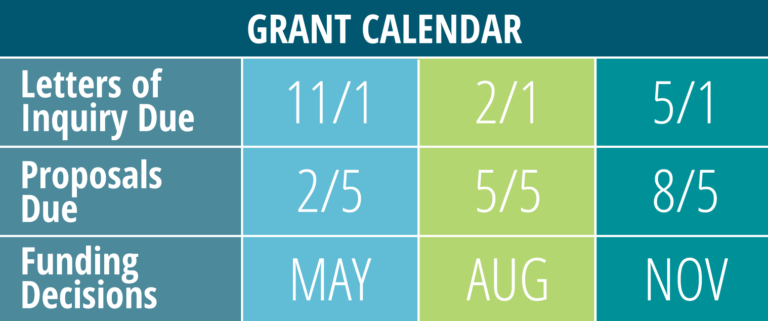
Learn about general grant exclusions, search our FAQs, watch an instructional video on our application process, read evaluation guidelines and learn how to develop SMART objectives.
Check Out Our Issue Brief on Caregiving
Subscribe to our E-Newsletter