Age Equity
Reducing ageism toward older adults and challenging age bias
Age Equity is a core priority of RRF Foundation for Aging’s 2026–2030 Strategic Plan. Through this work, RRF seeks to reduce ageism and age bias. By challenging harmful assumptions, policies, and practices, we can advance equity and opportunity across the lifespan and build stronger, more inclusive communities.
Aging is a lifelong, universal experience. Ageism can shape how we see ourselves, how we think about growing older, how institutions and policies are designed, and how people are treated at different stages of life.
Ageism affects individuals, organizations, and society. Research shows that ageism can influence medical decision-making, employment and training opportunities, housing choices, access to services, and public investment. It can also affect health, well-being, social connection, and opportunities for meaningful participation. The costs of ageism are borne not only by individuals but also by health systems, employers, governments, and society as a whole.
Ageism can compound other forms of discrimination. For people of color, LGBTQ+ people, women, immigrants, refugees, people with disabilities, and others who experience systemic inequities, the effects of discrimination can accumulate across the life course. Advancing age equity therefore requires attention to how age intersects with race, ethnicity, gender, disability, sexual orientation, and other identities.
Key strategies within this priority area include: Changing Norms and Understanding; Reducing Institutional Age Bias; and Strengthening the Age Equity Landscape. Click below to read more.
RRF supports efforts that:
- reframe aging using research-based communications;
- challenge harmful stereotypes;
- elevate evidence about the negative impacts of ageism;
- position ageism as a public health issue; and
- promote a more accurate, complete picture of aging that includes older adults of all abilities and aspirations.
RRF is particularly interested in work that produces sustainable systems change. This strategy goes beyond changing individual attitudes to reshape the structures that influence people’s everyday lives such as:
- community services;
- employment;
- family systems and structures;
- healthcare;
- higher education;
- housing; and
- public policy
RRF invests in cross-sector collaboration, learning communities, policy research, and leadership that builds a cohesive field focused on reducing ageism.
In this priority area, RRF is most interested in the grantmaking approaches of Advocacy, Knowledge Sharing & Awareness Raising, and Research. Click below to learn more.
RRF supports efforts that identify, challenge, and eliminate age bias, as well as reforming laws, policies, and institutional practices influenced by age bias.
RRF supports communications, narrative change, journalism, public education, and field-building projects that increase the understanding of ageism as a serious and often overlooked form of inequity. This includes efforts to counter harmful stereotypes, elevate evidence on the impacts of ageism, the development of practical tools to equip organizations and leaders to apply an age-inclusive lens.
RRF prioritizes applied research that generates actionable evidence, with direct implications for:
- policy
- organizational practice
- field development
Things to Know
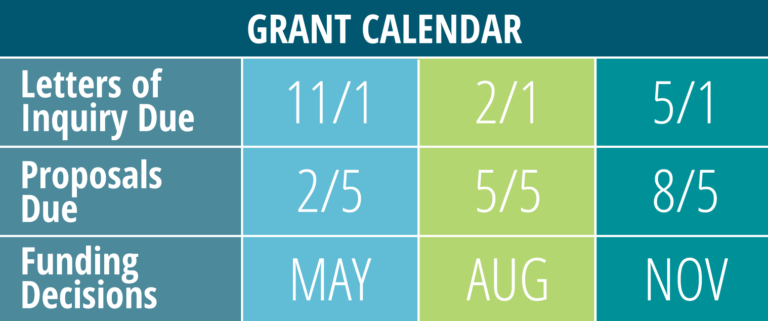
Learn about general grant exclusions, search our FAQs, watch an instructional video on our application process, read evaluation guidelines and learn how to develop SMART objectives.
Read our Issue Brief on Age Equity
Subscribe to our E-Newsletter