Social Connection
Reducing isolation and loneliness in later life through efforts that strengthen meaningful social bonds
Now, more than ever, there is recognition that meaningful social connection is a fundamental part of what constitutes a good life at any age. Yet too many older adults experience social isolation and loneliness due to structural barriers, life transitions, inequities, and ageism embedded in our systems and communities. While often conflated, isolation is the objective lack of social contact or support, while loneliness is the subjective (and negative) feeling of being alone. RRF Foundation for Aging seeks to advance a more connected future for older adults by investing in research, practice, policy, and knowledge sharing that place social connection at the center. Our approach emphasizes evidence, equity, and lived experience, recognizing that meaningful connection must be intentionally designed, supported, and sustained across communities and systems in order to achieve quality of life and dignity for all of us as we age.
RRF prioritizes work that centers social connection as the main focus, rather than a secondary benefit, with the goal of meaningfully reducing social isolation or loneliness among older adults.
RRF is investing in three key strategies to improve Social Connection: Expanding Access to Effective Social Connection Programs and Interventions; Accelerating Learning, Research Translation, and Field Building; and Advancing Policy and Systems that Support Social Connection. Click below to read more.
RRF seeks to increase the availability and reach of proven and promising programs to foster social connection among older adults, particularly those who face cultural or structural barriers, life transitions, and solo aging.
RRF is interested in efforts that strengthen the ability of practitioners and researchers in the field to learn from emerging evidence and practice around social connection in later life, and apply that knowledge across sectors and communities.
We support the promotion of policies and system-level changes that recognize social connection as essential to healthy aging.
RRF is interested in efforts to strengthen social connection that: are shaped by older adults themselves; increase meaningful relationships and community belonging; and decrease inequities in access.
We are interested in funding approaches that intentionally emphasize agency, reciprocity, and purpose—not programs that simply enable “contact” with other people.
Finally, we are looking for greater alignment between research, practice, and policy related to social connection.
RRF will consider proposals focusing on reducing isolation and loneliness through the approaches of Advocacy, Research, Knowledge Sharing & Awareness Raising, and Direct Service in Illinois. Click below to learn more.
Projects to advance systems change that reduce isolation and loneliness, either nationally or in Illinois; these projects could focus on:
- Elevating social connection and loneliness as public health and aging policy priorities;
- Promoting coalition building, grassroots organizing, and participatory action;
- Supporting advocacy to integrate social connection into existing services such as health, housing, transportation, or long-term services and supports; and
- Reducing structural and environmental barriers to connection (e.g., ageism, accessibility, and digital inequities).
Funding is available for action-oriented research with a focus on the following:
- Implementation studies to understand best practices for embedding social connection into health care, aging services, housing, and community settings;
- Opportunities to engage isolated and lonely individuals into social programming, and ways to sustain social engagement; and
- Projects that leverage technology to reduce isolation and loneliness in ways that align with older adults’ preferences.
Convey information, educate audiences, and drive positive change on aging issues through:
- Journalism and narrative change efforts that elevate lived experience and community knowledge alongside academic evidence;
- Supporting communities of practice and cross-sector learning networks;
- National implementation and dissemination of model programs;
- Collaborative efforts to translate research into actionable guidance for practitioners, policymakers, and advocates; and
- Disseminating tools, frameworks, and lessons that support replication and adaptation of proven and promising social connection programs.
RRF is interested in funding innovative, new programs in community settings in Illinois that significantly expand or enhance the availability and quality of scalable models and approaches to reducing isolation and loneliness. Specifically, RRF is interested in:
- Supporting community-based organizations to deliver and evaluate evidence-informed models that could be disseminated nationally.
- Strengthening workforce and volunteer capacity across Illinois to facilitate connection-centered services.
*Generally, RRF is not interested in funding efficacy studies (including randomized controlled trials) of new social connections programs.
Things to Know
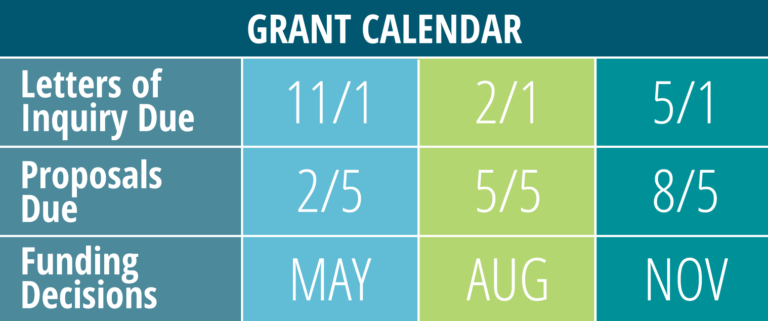
Learn about general grant exclusions, search our FAQs, watch an instructional video on our application process, read evaluation guidelines and learn how to develop SMART objectives.
Read our Issue Brief on Social and Intergenerational Connectedness
Subscribe to our E-Newsletter