Age Equity
Reducing ageism toward older adults and challenging age bias
RRF Foundation for Aging has made the decision to include Age Equity as a Priority Area within its 2026-2030 Strategic Plan. Ageism is a deeply embedded and often invisible force shaping policies, practices, and everyday interactions. The World Health Organization has defined ageism as stereotypes (how we think), prejudice (how we feel), and discrimination (how we act) toward others or oneself based on age. We know that ageism operates both internally and externally, and at personal, cultural, and structural levels. Ageism shapes how people are perceived and treated across the lifespan—and most acutely in later life. It can impact our health, longevity and well-being while also having far-reaching economic consequences.
We recognize that for older adults from RRF’s populations of focus (older people of color, LGBTQ, women, and/or immigrants and refugees), the impacts of systemic-level ageism are compounded by disparities that accumulate over the lifespan—making challenges and inequities in later life even more profound.
Key strategies within this priority area include: Changing Norms and Understanding; Reducing Institutional Age Bias; and Strengthening the Age Equity Landscape. Click below to read more.
Supporting efforts that reframe aging and older adulthood by countering stereotypes, elevating evidence on the harms of ageism, and positioning ageism as a serious equity and public health issue.
Advancing work that identifies and addresses age bias embedded in laws, policies, organizational practices, and systems (e.g., health, housing, and employment), with an emphasis on building the evidence case for action to achieve scalable and sustainable change.
Investing in cross-sector collaboration, learning communities, policy research, and leadership that builds a cohesive field focused on age equity.
In this priority area, RRF is most interested in the grantmaking approaches of Advocacy, Knowledge Sharing & Awareness Raising, and Research. Click below to learn more.
Efforts that identify, challenge, and reform the age bias that is currently embedded in laws, policies, and institutional practices across sectors such as health, housing, employment, and community systems. Priority will be given to work that advances sustainable, system-level change and elevates age equity within broader equity and policy agendas.
Communications, narrative change, public education, and field-building projects that increase the understanding of ageism as a serious and often overlooked form of inequity. This includes efforts to counter harmful stereotypes, elevate evidence on the impacts of ageism, and equip organizations and leaders with practical tools to apply an age-inclusive lens.
RRF’s emphasis is on actionable research that can inform policy, practice, and broader field development. This may include projects that examine how age bias operates within systems and institutions, and projects that evaluate strategies to reduce ageism and promote age equity.
Things to Know
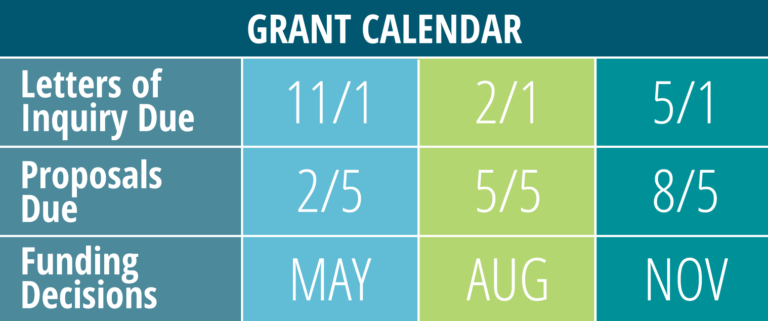
Learn about general grant exclusions, search our FAQs, watch an instructional video on our application process, read evaluation guidelines and learn how to develop SMART objectives.
Subscribe to our E-Newsletter